CONTACT US: +90 543 233 26 08







Abdominal Etching in Antalya, Turkey
Abdominal Etching, also known as six pack surgery or ab sculpting, is an advanced surgical procedure designed to enhance the appearance of the abdominal muscles, creating a defined, athletic, and sculpted six-pack.
This procedure is ideal for individuals who have good muscle tone but want to highlight their abdominal contours by removing small, targeted areas of fat that obscure the natural definition.
How Abdominal Etching (Six Pack Surgery) Is Performed
Abdominal Etching uses a specialized liposuction technique called HD Lipo or 4D Body Contouring.
Step-by-Step Procedure:
Precision Planning: The surgeon marks the natural contours of the abdominal muscles to guide fat removal.
Small Incisions: Tiny incisions are made strategically around the abdominal area.
Targeted Fat Removal: A thin cannula is used to remove small amounts of fat around the abdominal muscles, revealing the natural six-pack lines.
Contour Enhancement: The procedure sculpts the abdomen for a defined, athletic appearance while maintaining natural proportions.
Because Abdominal Etching requires extreme precision, it should be performed by an experienced liposuction specialist to achieve the best results.
Who Can Benefit from Abdominal Etching?
Patients with good underlying abdominal muscle tone but minor fat deposits
Individuals seeking a defined, athletic six-pack look
Those who want enhanced body contouring beyond traditional liposuction
Abdominal Etching in Antalya with Dr. Altan Tekin
At Altan Tekin Clinic in Antalya, Dr. Altan Tekin and his team of liposuction specialists are experts in HD Lipo and Abdominal Etching procedures.
High-precision fat removal
Natural, athletic-looking abdominal definition
Focus on patient safety and optimal outcomes
With the clinic’s experience and advanced techniques, patients can achieve high-quality results that highlight their natural abdominal muscles while ensuring safety and a smooth recovery.
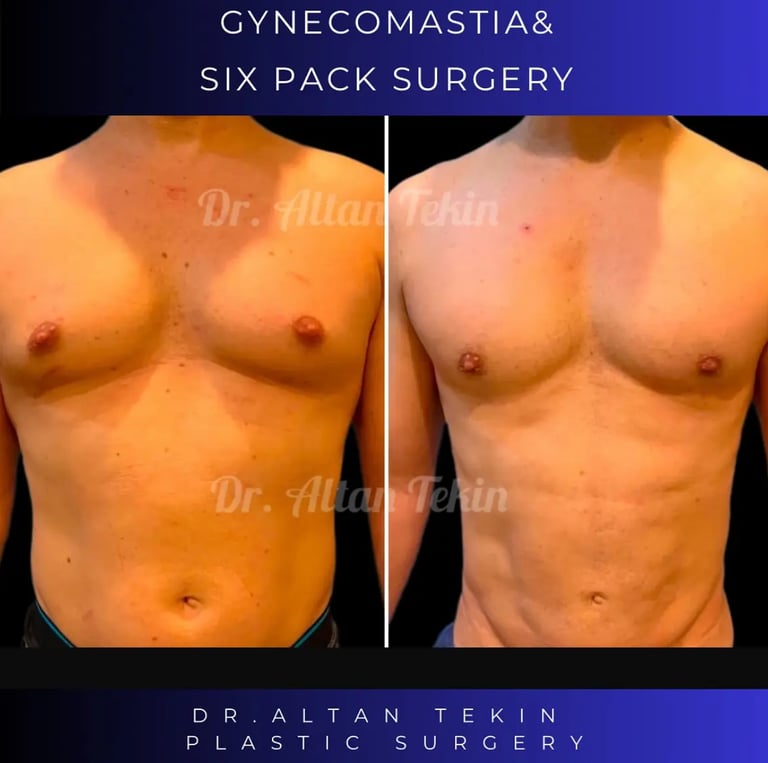












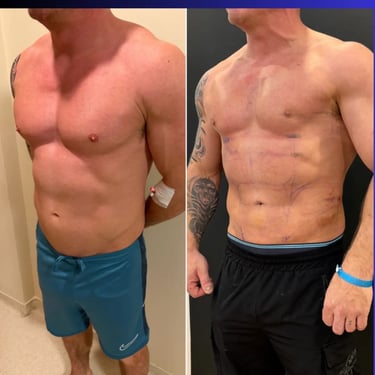
Abdominal Etching Before and After Results in Antalya
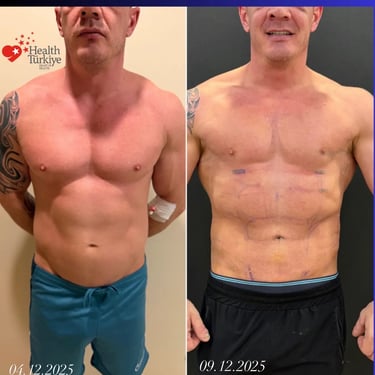
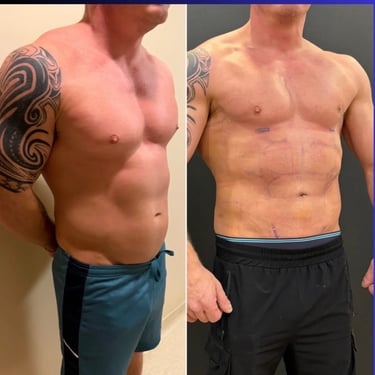
Which Type of Liposuction is Used for 4D Abdominal Etching?
Power Assisted Liposuction
Power Assisted Liposuction is a fat removal technique which extracts unwanted fat through a thin cannula. Unlike traditional Liposuction, the cannula is powered, using rapid vibration to break down the fat, making it easier to remove from the body. Power Assisted Liposuction is very precise and requires less physical force from the surgeon, minimising damage to the surrounding tissues. This reduces swelling and bruising leading to shorter recovery times.
Vaser Liposuction
Vaser Liposuction uses ultrasound technology to break down the fat cells before they are extracted. It is another highly precise Liposuction method, and the ultrasound technology can stimulate collagen production in the skin, promoting skin tightening and enhancing the final Abdominal Etching result.
Laser Liposuction
Similar to other Liposuction methods, Laser Liposuction (also known as Smart Lipo) extracts fat from the body, but in this case, laser technology breaks down the fat. Laser Liposuction is also used for precise and targeted areas, making it highly suited to Abdominal Etching. The laser technology also helps to tighten the skin by encouraging collagen production, further defining the abdominal muscles.
BodyTite
BodyTite is a complementary surgical technique to Liposuction but does not involve fat extraction. A small incision is made in the skin, and a Radiofrequency probe is inserted. This effectively tightens the skin through collagen and elastin production, stimulated by a controlled trauma to the skin. As this is a dedicated technique, the skin tightening results are more significant than those possible from combination Liposuction methods. BodyTite is typically combined with Liposuction to enhance the final result and enhances the results of Abdominal Etching by tightening the skin around the abdominal muscles, making the abs more apparent.
Abdominal Etching Before and After
During your initial consultation with your surgeon at our award-winning clinic, you will be able to view a selection of Abdominal Etching before and after images. Your surgeon will show you photos of their previous patients who had concerns and desired outcomes similar to your own. This will allow you to see the quality of your surgeon’s work and also the results that are possible for you. Your surgeon will also show you Abdominal Etching before and after images from cases that have utilised different Liposuction methods to help you understand the differences between the available options. Abdominal Etching Before and After photos will help you to make a final decision about your procedure.
Why Do People Have Abdominal Etching?
Abdominal Etching is designed to address a range of functional and medical concerns, and can also deliver aesthetic improvements to the abdominal area:
Medical reasons:
To refine and define abdominal contours after weight loss or reconstructive surgery, where natural definition is lost, resulting in skin irritation or hygiene concerns.
To address contour irregularities or residual fat deposits around the abdominal muscles, which may be causing postural and mobility issues.
Aesthetic reasons:
To enhance muscle definition and create the appearance of a naturally toned abdomen.
To achieve a sculpted, athletic appearance tailored to individual body goals.
To improve confidence in body contour and overall physical presentation.
Who Is Suitable for Abdominal Etching?
During your one-to-one consultation at our surgical centre of excellence, your surgeon will assess whether you are suitable for an Abdominal Etching procedure. They will begin by discussing your concerns and reasons for considering an Ab Sculpting surgery. Your surgeon will then examine your abdominal muscles and suggest the most suitable surgical techniques for achieving your desired results. They will also consider your medical history, including your physical and mental health, to ensure you are in suitable condition for a general anaesthetic surgery.
When deciding if you are suitable for Abdominal Etching, your surgeon will consider:
Your concerns – Having stubborn fat deposits which are softening the appearance of your abdominal muscles is a typical concern for considering a six pack surgery.
Your desired outcomes – It is essential to have realistic expectations for what Ab Sculpting can achieve. Your surgeon will explain the results that are possible for you during your consultation.
Your weight – Abdominal Etching is not a weight loss procedure. You should already be your ideal weight and have maintained this for 6-12 months.
The amount of abdominal fat you have – Even if you have reached your ideal weight, it is important to understand that if you have a larger amount of abdominal fat, your final results from a six pack operation may be slightly softer than for a patient who is naturally leaner.
Your overall physical and mental health – Your surgeon will consider your blood pressure, heart rate, weight, and height to ensure you are fit and well for surgery. If you have any mental health concerns, this will also be taken into account.
If your surgeon determines that you are a suitable candidate for an Ab Etching procedure, they will finalise your surgical plan and send it to your patient advisor. Your advisor will contact you to discuss your plan, the final surgery price, and surgery dates. You will then have a mandatory two-week cooling-off period. During this time, you can consider your surgical plan and ask any questions. You can also schedule a follow-up appointment with your surgeon if you wish to speak to them again.
Types of Abdominal Fat
Your abdominal fat type is crucial to deciding your suitability for a surgical six pack. Where your abdominal fat is located indicates the type of fat you have.
Subcutaneous fat is located underneath the skin and above the underlying muscle.
Visceral fat is located underneath the muscle, within the abdominal cavity, surrounding your vital organs.
Visceral fat cannot be extracted with Liposuction, and Abdominal Etching is not possible in these instances. High visceral fat levels are more dangerous to your health and more common in men. Although genetics play a part in how the body stores visceral fat, a diet high in fat, carbohydrates, and alcohol may lead to visceral fat developing.
Visceral fat shows as an enlarged and rounded abdomen - sometimes known as a beer belly or pot belly. Although this may feel firm, like muscle, it is fat underneath the abdominal muscles.
Subcutaneous fat can be removed with Liposuction and is suitable for Ab Etching. It feels soft and can be pinched easily from outside the skin. Your surgeon will assess the type of abdominal fat you have during your consultation to ensure you are suitable for a six pack operation.
What are the Benefits of Abdominal Etching?
Despite being a straightforward and minimally invasive procedure, Ab Etching has many benefits and can be transformational for patients.
Enhanced abdominal contours – By extracting stubborn pockets of fat from around the abdominal muscles, the contours of the six-pack are defined, creating an athletic appearance.
Tightened skin—Techniques such as BodyTite, Laser Liposuction, or Vaser Liposuction can tighten the overlying skin, helping it lie closer to the muscles and further emphasising abdominal definition.
Natural, long-lasting results—Cadogan Clinic’s team of expert consultants focus on achieving bespoke, high-quality surgical outcomes for all our patients. Ensuring that your results are flattering to your body and last for many years is a priority for all of our surgeons, ensuring the highest patient satisfaction.
Improved confidence – Stubborn fat deposits can be a letdown for patients who have devoted time to achieving their body goals through exercise and diet. HD six pack surgery can restore confidence and empower patients to appreciate their results fully.
What are the Risks of Abdominal Etching?
Before proceeding with Abdominal Etching, it is vital to be aware of the potential risks and complications that may arise during and after your surgery. Your surgeon will discuss all possible complications with you during your consultation and will assess your personal risk. They may ask you to follow certain steps as you are preparing for surgery to reduce your risk level.
Some potential complications include:
Hematoma or Seroma - This is the build-up of blood or fluid beneath the skin and will require treatment from your surgeon
Poor wound healing - Healing complications or infection can affect the incision sites
Asymmetry - Occasionally, the abdomen may appear uneven
Excessive bleeding
Allergic reaction to general anaesthetic
Infection at the surgical site
Deep vein thrombosis (blood clot in a vein)
All of Tekin Clinic’s consultant surgeons are highly skilled and have performed six pack surgery numerous times. Any complications that arise are not a reflection of your surgeon’s skill and qualifications.
Frequently Asked Questions
What is abdominal etching?
Abdominal etching sculpts the belly to highlight muscle definition.
Is the procedure painful?
How long is recovery time?
Are results permanent?
Who is a good candidate?
Local anesthesia is used, so discomfort is minimal during surgery.
Most patients return to light activities within a week and full recovery takes about four weeks.
Results last long with a stable weight and healthy lifestyle after surgery.
Ideal candidates are healthy adults with good skin elasticity and abdominal muscle tone.
What is a six pack?
A six-pack refers to the pair of parallel muscles called the rectus abdominis that run vertically down the front of the abdomen. These muscles are intersected by tendons, creating the appearance of six segments. When the rectus abdominis is well developed, and there is little subcutaneous fat overlying the muscle, these segments are apparent through the skin, giving the abdomen an athletic and defined appearance.
What is the difference between Abdominal Etching and Ab Implants?
A six-pack refers to the pair of parallel muscles called the rectus abdominis that run vertically down the front of the abdomen. These muscles are intersected by tendons, creating the appearance of six segments. When the rectus abdominis is well developed, and there is little subcutaneous fat overlying the muscle, these segments are apparent through the skin, giving the abdomen an athletic and defined appearance.
A six-pack refers to the pair of parallel muscles called the rectus abdominis that run vertically down the front of the abdomen. These muscles are intersected by tendons, creating the appearance of six segments. When the rectus abdominis is well developed, and there is little subcutaneous fat overlying the muscle, these segments are apparent through the skin, giving the abdomen an athletic and defined appearance.