CONTACT US: +90 543 233 26 08







Otoplasty (Prominent Ear Surgery) in Antalya
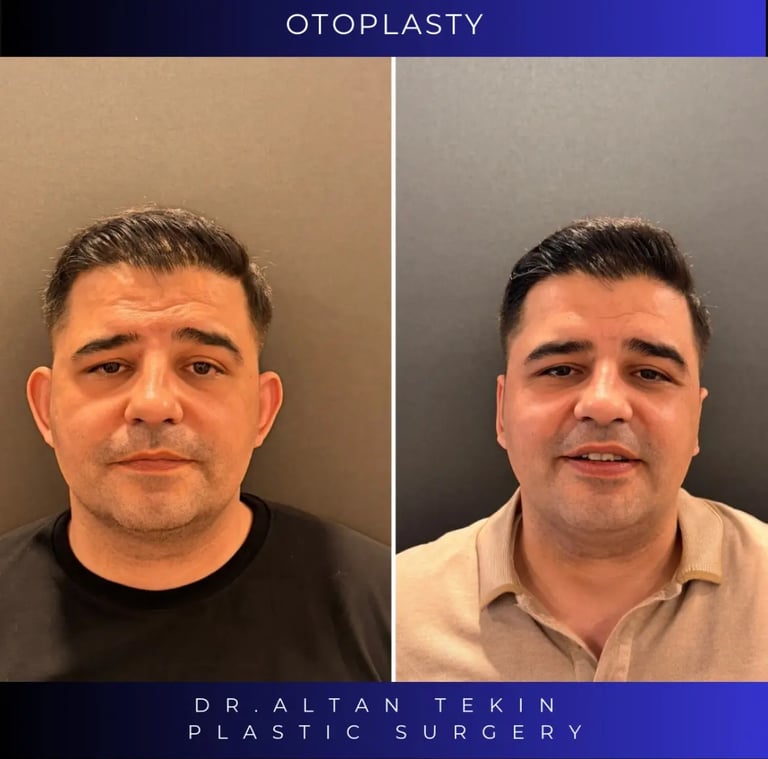
Otoplasty, also known as prominent ear surgery or ear aesthetics, is a plastic surgery procedure performed to correct the shape, position, or proportion of the ears. The goal of otoplasty is to create a more natural and balanced ear appearance that is in harmony with the facial structure.
In Antalya, otoplasty procedures are commonly performed for both children and adults. Dr. Altan Tekin, a plastic, reconstructive, and aesthetic surgery specialist in Antalya, plans each otoplasty procedure individually to achieve safe, natural, and long-lasting results.
What Is Otoplasty?
Otoplasty is a surgical procedure designed to correct congenital ear deformities, improve ear symmetry, or reposition ears that protrude excessively from the head. The surgery can enhance facial balance and significantly improve self-confidence.
Otoplasty can be performed on one or both ears, depending on the patient’s needs and aesthetic goals.
In Which Situations Is Otoplasty Performed?
Protruding (Prominent) Ears
When the ears protrude too far from the head or are rotated outward, otoplasty can reposition them closer to the head for a more natural appearance.
Ear Shape Irregularities
If the folds or contours of the ear are underdeveloped or improperly formed, otoplasty can reshape the ear cartilage to correct this condition.
Asymmetrical Ears
Differences in ear size, shape, or position can be corrected with otoplasty to achieve better symmetry.
Otoplasty Techniques
Classical Otoplasty (Cartilage Reshaping Technique)
In this traditional method, sutures are used to reshape the ear cartilage and bring the ears closer to the head. The cartilage is carefully modified to create natural ear folds and improve positioning.
Sutureless Otoplasty (Non-Incisional Technique)
This technique uses special methods such as surface sutures or advanced fixation techniques instead of traditional cartilage cutting. It may offer reduced scarring and a faster recovery in selected patients.
Cartilage Grafts
In cases where cartilage support is insufficient or damaged, cartilage grafts may be used to strengthen and reshape specific areas of the ear.
Otoplasty Surgery and Recovery
Otoplasty surgery is usually performed under local or general anesthesia, depending on the patient’s age and surgical complexity. The procedure typically allows same-day discharge.
After surgery, mild swelling, bruising, and discomfort are normal. Stitches are usually removed within a few weeks, and complete recovery may take several weeks to a few months.
Following the surgeon’s pre- and post-operative instructions is essential for achieving optimal results.
Otoplasty in Antalya with Dr. Altan Tekin
Dr. Altan Tekin, plastic surgery specialist in Antalya, provides otoplasty surgery with a patient-centered approach, focusing on safety, comfort, and natural aesthetics. Each patient receives a personalized treatment plan based on their anatomy and expectations.
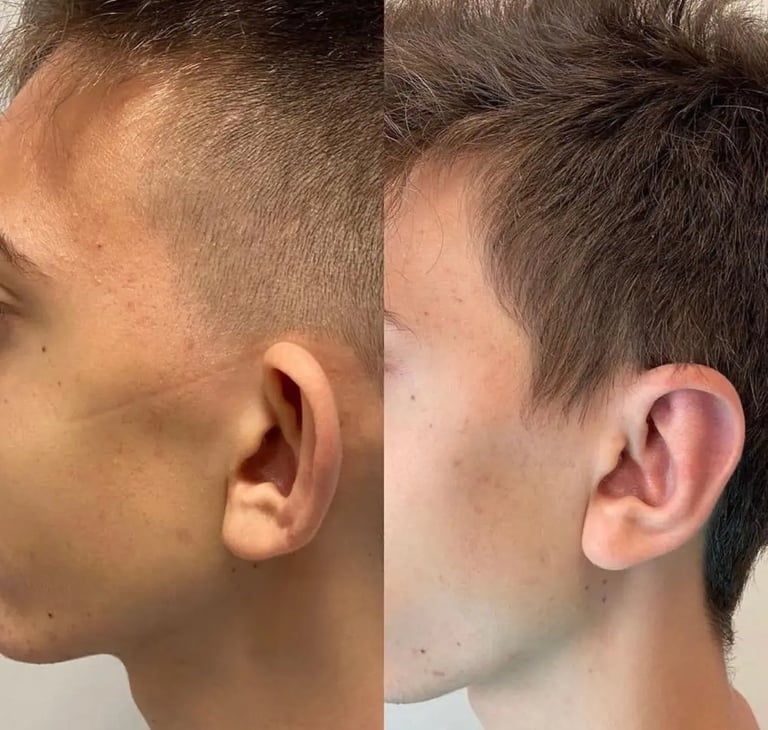
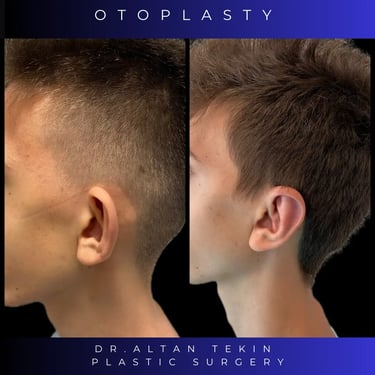
Before and After Otoplasty Surgery in Antalya
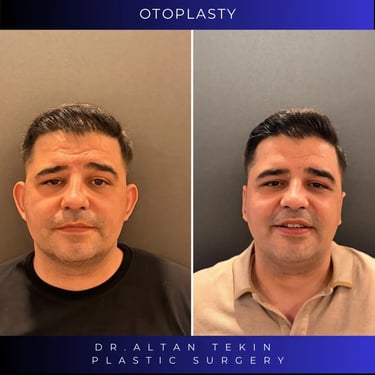
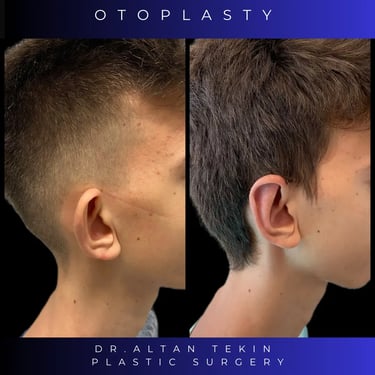












What should be considered after otoplasty?
There are some important points to consider after otoplasty (ear surgery). Following these recommendations can speed up the healing process, reduce the risk of complications and help you maintain the surgical result in the best possible way. However, remember that since every patient is different, you should always follow the recommendations of the doctor who performed the surgery. Here are some general recommendations to follow after otoplasty surgery:
Rest and Recovery: Get enough rest in the postoperative period. It is important to keep your head elevated and avoid heavy activities.
Cold Application: You can apply an ice pack or cold compress to reduce swelling and bruising after surgery.
Stitch Care: If stitches were used, take care of them as recommended by your doctor. Find out when to remove the stitches.
Head Position: You can reduce swelling and bruising by keeping your head elevated.
Medication Use: Take painkillers and medications regularly as prescribed by your doctor. This can help you keep the pain under control.
Nutrition and Hydration: Eat a healthy diet and make sure you drink enough water. This can support the healing process.
Smoking and Alcohol: Limit or stop smoking and drinking alcohol in the postoperative period if possible. This can have a positive effect on the healing process.
Doctor Check-ups Do not forget to go to your doctor regularly after the surgery. Your doctor will follow your recovery process and make recommendations if necessary.
Sports and Physical Activities: Avoid heavy sports and physical activities after surgery. Do not start exercising without your doctor's approval.
Eye Protection: You can use sunglasses to protect your eyes from sunlight, wind and dust.
Monitoring Side Effects: If you experience more pain, redness, signs of infection or other problems than usual after surgery, contact your doctor immediately.
What are the Complications of Otoplasty?
Otoplasty (ear surgery) is generally a safe surgical procedure. However, as with any medical intervention, otoplasty surgery has potential risks and complications. These risks can vary depending on factors such as the patient's general health, the complexity of the surgery, surgical experience and technique. Here are some of the possible complications of otoplasty surgery:
Infection: As with any surgical procedure, there is a risk of wound infection after otoplasty surgery. To prevent this, it is important to pay attention to postoperative suture care and follow hygiene rules.
Bleeding: Bleeding may occur during or after surgery. Therefore, it is important to avoid heavy physical activities in the postoperative period.
Scars: Scars may form as a result of otoplasty surgery. These scars may fade and become less prominent over time, but they may appear in different ways for each individual.
Asymmetry: Symmetry problems may occur in the ears after surgery. An imbalance or asymmetrical appearance may occur between the ears.
Stitch Problems: Problems such as opening or irregular healing of the stitches may occur.
Sensory Changes: Sensory changes in the ears may occur after surgery. This is usually temporary.
Vision Problems: In rare cases, temporary blurred vision or other vision problems may occur after surgery.
Ear Necrosis Ear tissue necrosis may occur due to circulatory disorders after surgery. This is a rare complication.
Anesthesia Reactions: Reactions to the anesthesia used during surgery may occur.
Psychological Effects: Emotional difficulties may sometimes occur after surgery. It is important to be aware of this and seek psychological support when necessary.
Although these complications are possible, it is important to remember that otoplasty surgery is performed successfully and safely in most cases. The plastic surgeon who will perform the surgery will assess the patient's specific situation and explain the possible risks in advance. It is important to follow your doctor's advice before and after surgery to minimize the risks.


Frequently asked questions
What are the possible complications after otoplasty?
There may be some complications after otoplasty surgery. These include infection, bleeding, excessive swelling and pain. Infection may manifest itself with symptoms such as redness, inflammation and increased temperature in the surgical area. Bleeding usually occurs within the first few days after surgery and may be seen as bruising or oozing in the surgical area. Excessive swelling is normal after surgery, but should decrease over time. Pain may also occur after surgery and is usually mild to moderate. These complications are usually temporary and should be monitored by your doctor in the postoperative period. With early intervention and appropriate treatment, most of these complications can be controlled.
How and for how long should a corset be used after otoplasty?
The use of a corset is very important after otoplasty surgery. It is recommended to use a corset to reduce swelling, bruising and pain that may occur after surgery. The corset tightly wraps the ears to support the healing process and prevents unwanted movements. Generally, the use of a corset after otoplasty can vary between 1 and 2 weeks. This period is determined by your doctor's recommendations and may vary depending on the person's healing rate. The corset should be used continuously, day and night. In this way, the new shape of the ears is maintained and the necessary support is provided for better results. It is possible to achieve the desired results faster with the use of a corset after otoplasty.
Can prominent ears open up again after surgery? If they do, can surgery be performed again?
After prominent ear surgery, sometimes opening can occur again. However, this is not seen in every patient and is usually a rare complication. If your ears open again after prominent ear surgery, you may need to have another surgery. If the prominent ear deformity reoccurs, it will need to be corrected again by a plastic surgeon. This surgery may not be as complicated as the first surgery, but it is important to consult your doctor for more information about the process. Remember, each person's recovery process is different and your doctor will provide you with the best treatment options.
At what age can prominent ear surgery be performed? How is it decided whether to perform it with local or general anesthesia?
Protruding ear surgery is a surgical procedure performed to correct the shape of the ears. This surgery is generally considered appropriate for children who have reached puberty, that is, approximately 12-14 years old. However, in some cases, it can be performed on younger children. The decision to perform local or general anesthesia may vary depending on the child's age, health status, and surgeon preference. Local anesthesia is a method performed by numbing the surgical area and is generally preferred for younger children. General anesthesia is a method in which the child is put to sleep and may be preferred for older children or adults. Before the surgery, the doctor will evaluate the child to determine the most appropriate anesthesia method.
Which surgical technique gives the best results in prominent ear surgery? Which gives the best results in prominent ear surgery: bonding or stitching?
Which surgical technique gives the best results in prominent ear surgery? The answer to this question may vary depending on the research and experience of doctors. Prominent ear surgery is performed to correct the shape of the pinna and is usually performed using the bonding or stitching method. The bonding method involves using adhesives with various techniques to give the pinna the desired shape. The stitching method involves using stitches to correct the shape of the pinna. Which method gives the best results depends on the person's specific condition, the doctor's recommendations, and the patient's preferences. Therefore, it is difficult to give a definitive answer about the best surgical technique for prominent ear surgery.
Does prominent ear surgery have any harm to hearing?
Protruding ear surgery is a surgical procedure performed to make the ears less prominent. This procedure aims to achieve a more aesthetic appearance by changing the shape and appearance of the person's ears. However, protruding ear surgery does not harm hearing. This surgical procedure, which is related to the appearance of the ears, does not affect the structures in the ear and does not impair the hearing function of the ears. Therefore, people who want to have protruding ear surgery do not need to worry about their hearing ability. After this procedure performed by a specialist plastic surgeon, the ears gain a more symmetrical appearance and the person's self-confidence increases.
How is bonding done for protruding ear correction?
Bonding is a very common method for correcting prominent ears. This procedure is usually preferred in milder cases that do not require surgical intervention. During the bonding procedure, an adhesive is first applied to the ear cartilage. This adhesive is used to reshape and correct the ear cartilage. Then, the ear cartilage is fixed with a special tape and kept in this position for a while. During this time, the ear cartilage returns to its original state and regains its proper shape. Bonding usually provides fast and effective results, but it is important to consult a specialist.
When can I swim in the sea or pool after protruding ear surgery?
The time it takes to swim in the sea or pool after prominent ear surgery can vary from person to person. It is generally important to follow your surgeon's recommendations, as the healing process can vary from person to person. It is important to avoid contact with water for a few weeks after surgery, as your ears are healing during this time. Your surgeon will tell you exactly when you can swim in the sea or pool. This period is usually around 4-6 weeks after surgery. However, each case is different, so it is best to follow your surgeon's specific instructions. It is also important to take appropriate precautions to protect your ears and stitches when you enter the water.
Who is the best plastic surgeon in Antalya for protruding ears and otoplasty?
A prominent ear deformity is a condition in which a person's ears protrude more than normal. This condition is usually caused by genetic factors and is mostly considered an aesthetic problem. Otoplasty is a surgical procedure performed to correct a prominent ear deformity. It is difficult to answer the question of who is the best plastic surgeon in Antalya, because there are many experienced and expert surgeons in this field. However, it is important to consider factors such as experience, area of expertise, and patient satisfaction when choosing the best plastic surgeon. Therefore, it is recommended that you do your research and meet with several different surgeons to find the best plastic surgeon for your prominent ear problem. This will help you find the surgeon who will give you the best result.
When can I return to daily life and start work after protruding ear surgery?
The process of patients returning to daily life after prominent ear surgery may vary from person to person. While many patients whose recovery process progresses rapidly after surgery can return to their normal lives within a few days, this period may be longer for some patients. It is generally important for patients to rest and dress appropriately for 1-2 days after surgery. The patient should avoid activities that require excessive effort until the recovery process is complete. The process of returning to work may vary depending on the complexity of the surgery, the activities required by the job, and the patient's recovery rate. Therefore, it is important to follow your doctor's recommendations in this regard and attend regular follow-up appointments.
Is there a need for hospitalization after prominent ear surgery?
Whether or not hospitalization is required after prominent ear surgery varies depending on several factors. Generally, patients can be discharged on the same day after prominent ear surgery. However, depending on complications that arise during surgery or the patient's general health, a few days of hospitalization may be required. If there are wounds that need attention after surgery or if there are symptoms such as excessive pain or bleeding, hospitalization may be required for observation. However, each patient's situation may be different and hospitalization is decided upon after the evaluation made by the doctor. Therefore, whether or not hospitalization is required after prominent ear surgery depends on individual circumstances.
Address
Çelikoğlu Sitesi, B Block, 1st Floor, Apartment 3, 1546th Street, Şirinyalı, Muratpaşa, Antalya 07160, Türkiye
DR. ALTAN TEKIN
Op. Dr. Altan Tekin is a board-certified Plastic, Aesthetic and Reconstructive Surgeon in Antalya, Turkey.
Particular attention is given to patients seeking facelift surgery, body contouring after significant weight loss, and mommy makeover surgery.

